
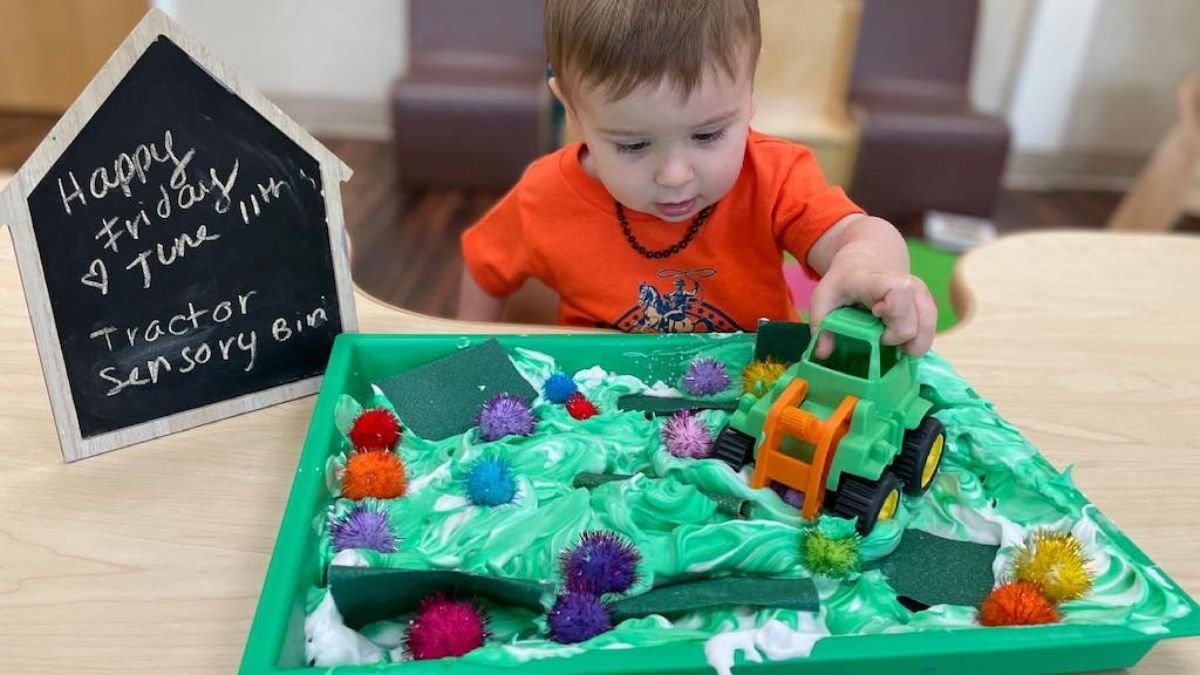
Sensory Play Ideas for Toddlers Using Everyday Items: Jackie Nunes is a woman who has turned her life experiences into an inspiration for others. She is a well-known blogger at WonderMoms.org and previously worked as a pediatric nurse. Today, she is a full-time homeschool educator with her family, educating her children at home. Jackie and her husband have three children, but the biggest challenge of their lives came when their middle daughter, at just four years old, suffered a traumatic brain injury.
This incident completely changed Jackie’s life. Now her daughter is 11 years old, hard of hearing, and uses a wheelchair. But this difficult time made Jackie stronger. Together with two other mothers, she founded a platform called Wonder Moms, where they share real stories, useful information, and practical tips for parents of children with special needs. This platform has become a beacon of hope for families whose children struggle with challenges such as intellectual disabilities, Down syndrome, autism, language and speech impairments, deafness, chronic illnesses, or brain injuries.
What is sensory play and why is it important?
For children, play is not just a means of entertainment but a vital part of the learning and understanding process. Sensory play, in particular, plays a crucial role in children’s overall development.
According to Kids First Community, “Any play that activates a child’s senses, such as touch, smell, sight, hearing, or small motor muscles, is called sensory play. It is an essential part of activating neural pathways during children’s early brain development.”
Simply put, sensory play helps children understand and connect with the world around them. When children go through different experiences, such as touching soil, playing with water, or experiencing different colors and sounds, they learn to better recognize the world.
Benefits of Sensory Play and Its Impact on Children’s Development
Sensory play contributes significantly to children’s intellectual, social, emotional, and physical development. When children use their senses in an activity, their brains are more able to understand and process new information.
This play promotes children’s cognitive development as they identify, compare, and experiment with different objects. Additionally, it improves their social skills because when they play with others, they learn to share, cooperate, and express emotions.
Sensory play also develops children’s linguistic and communication skills. When they describe an object or experience, they learn new words and strengthen their expression. Furthermore, it improves their motor skills (hand and finger movements), making them more adept at performing daily tasks.
Most importantly, sensory play calms children’s minds. It acts as a calming activity, reducing stress and anxiety and making them feel more centered.
Family and Sensory Play: A Way to Strengthen Relationships
In today’s fast-paced life, spending time with family is becoming increasingly difficult, but through sensory play, parents and children can spend quality time together. It serves as a medium not only for learning but also for emotional bonding.
When parents play with their children—such as with water, sand, paint, or clay—it not only helps children’s development but also fosters love and understanding within the family. Such activities make children feel safe and accepted with their parents. Parents also get a chance to understand their children’s interests and abilities.
Sensory play proves that play isn’t just for children, but a bonding medium for the entire family. Playing together strengthens family bonds and brings both confidence and happiness to children.
Sensory Activities to Do with the Family
If you want to engage in activities with your child that are both fun and educational, sensory play is the best way to do it. You can do many activities at home that activate children’s senses.
You can play with sand or water, which helps children experience touch and temperature. Making different shapes from clay or colored dough encourages children’s creativity. Let children paint with safe colors so they learn to mix colors and understand shades.
If you want to play a game of finding hidden objects, hide small toys in a rice or lentil container, which will not only be fun but will also improve children’s concentration and attention. Giving them coffee, lemon, or cinnamon to smell will also enhance their sense of smell.
Children blowing bubbles, playing with snow, or touching natural things like leaves and flowers are very happy and these activities are also very educational for them. These activities teach them to use their senses and make learning a happy process.
How Sensory Play Helps Children to Learn
Through sensory play children learn that education is not confined to books or the class. Every experience, every touch, and every smell is a learning opportunity. When children figure out something through their own experiences, that information stays with them for a long time.
Consider a situation when a child smells the earth or the soil or when a child feels the coldness of water, they are not simply playing a game, but they are learning to connect with and understand nature. This, in turn, keeps their brain active and increases their thinking abilities.
Participation in sensory experiences helps children develop not only self-confidence but also curiosity. They are eager to explore, touch, and understand everything that, in turn, broadens their learning horizons.
Conclusion: A New Direction for Learning Through Play
Jackie Nunes and her team’s message is clear—let children play, because play is the first school of learning. Through sensory play, children not only learn new things, but also learn to connect, share, and be happy with their families.
Initiatives like Wonder Moms are a living example of how a mother’s experience of sharing her experiences becomes an inspiration for countless families. Sensory play for children with special needs is not just a medium of education, but also an art of understanding and living life.
The greatest gift for children is their parents’ companionship, affection, and time. When this is given through play, learning becomes one of the most enjoyable and memorable experiences of their lives.
