
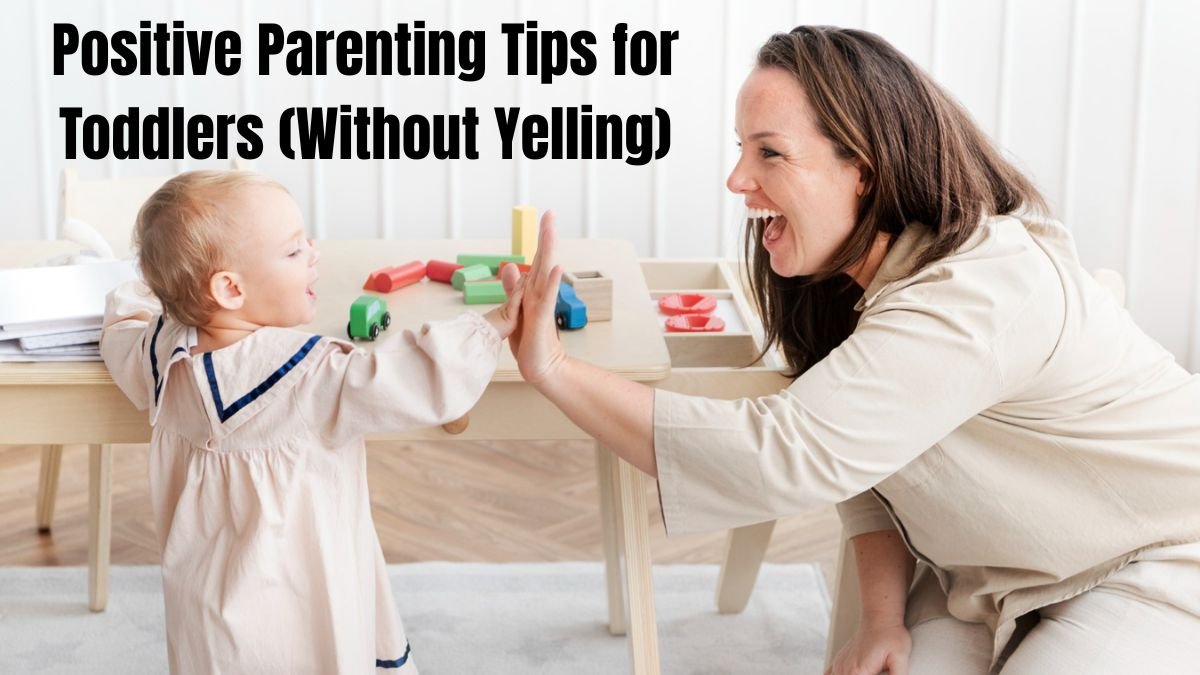
Toddlers, children aged 1 to 3 years, are in the most curious and challenging phase of their lives. At this age, children want to touch, understand, and experience everything in their own way. Therefore, it is crucial for parents to communicate with them effectively and guide them in the right direction. Positive parenting is based on this idea—understanding the child and correcting their behavior in a positive way, without anger or yelling.
In this article, we will learn in detail how to adopt positive parenting for toddlers, what mistakes to avoid, and how to give the child the opportunity to learn and develop without fear.
What is Positive Parenting?
Positive parenting means adopting positive measures to correct a child’s behavior, instead of showing anger or yelling at them. The main goal is to maintain the child’s self-esteem and understand their emotions.
Key points: Tell the child which behavior is correct.
Explain mistakes instead of getting angry about them.
Appreciate the child’s achievements and good behavior.
Understanding the Toddler’s Psychology
Toddlers cannot express their emotions in words. They show their needs and frustrations by crying, yelling, or having tantrums. At this age, a child’s world is very simple—they need love, security, and stability.
Tips for parents:
- Name the child’s emotions: “I think you are angry.”
- Respond to tantrums calmly and steadily instead of ignoring them.
- Give the child choices: “Do you want to wear the red clothes or the blue ones?”
The Importance of Peaceful Communication
Explaining things to a child without yelling is the biggest challenge. Here are some easy ways to communicate:
- Get closer: Sit down at the child’s level and talk to them.
- Use simple language: Explain in short sentences and easy words.
- Use positive phrasing: Say, “Please pick up the toys” instead of “Don’t drop the toys.” Be patient: Learning takes time for children; guide them gradually.
Learning Through Play
Toddlers learn best through play. It’s the most important part of their development. Positive parenting incorporates play as a learning tool.
Some examples:
- Learning sequences with colorful blocks.
- Teaching counting and letters through games.
- Developing social skills through role-playing (playing shopkeeper, doctor, etc.).
- Parents should always be encouraging and supportive during playtime, not scolding for mistakes.
Establish a Consistent Routine
Establishing a routine is crucial for toddlers. It provides them with a sense of security and helps regulate their behavior.
Daily routine suggestions:
- Maintain regular wake-up and bedtime.
- Set fixed times for meals and snacks.
- Schedule time for play and learning.
- Include 1-2 periods of rest and naps during the day.
A consistent routine significantly reduces tantrums and disruptive behavior in children.
Encourage Positive Behavior
It’s essential to praise toddlers whenever they exhibit good behavior. This teaches the child that positive actions are rewarded.
Examples: “You put your book back, well done!”
“You shared your toy with your brother, that was very kind.”
Encouragement can be given not only through words but also with smiles, hugs, and small rewards.
Offer Choices and Foster Decision-Making Skills
Toddlers want to feel in control of their environment. Offering small choices gives them a sense of independence and reduces tantrums.
Examples:
- “Do you want to wear the blue shirt or the red one?”
- “Will you pick up your toys first or wash your hands?”
- This also helps children learn to make decisions.
Avoid Shouting and Punishing
In positive parenting, it’s crucial to avoid shouting and harsh punishments. These can create fear and insecurity in children.
Alternative approaches:
- Take a deep breath and stay calm.
- Use words to explain things to your child.
- Use the time-out technique for misbehavior—have the child sit in a quiet room for 1-2 minutes.
Setting Rules for Children
Rules for toddlers should be short, clear, and consistent. Following rules helps children understand what is right and wrong.
Examples:
- “Sharing toys is important.”
- “We don’t watch TV while eating.”
- “We close the door when we go into a room.”
- After setting the rules, parents should also follow them themselves.
Parental Example
Children learn most from their parents. If you remain calm and positive, your child will learn to behave similarly.
Important points:
- Avoid arguing or showing anger in front of your child.
- Maintain patience and self-control in your behavior.
- Respect your children’s feelings and listen to them.
Social Skills and Friendship
It’s crucial for toddlers to learn how to play and interact with others. Positive parenting encourages the development of social skills.
How to do it:
- Teach children to share during playtime.
- Allow them to participate in group activities.
- Instill the habit of making friends and respecting them.
Conclusion
It is not an easy task to bring up a toddler; however, positive parenting will make the process much easier and effective. Loving, respecting, and guiding your child without screaming and using fear as your methods of ensuring discipline lays the ground work of the child mentality and emotional maturity.
Remember:
- Positive behavior should be encouraged.
- Embrace non-violent communication.
- Options and freedom of choice.
- Create schedules and regulations.
- Be a good role model as a parent.
By using these strategies, not only will your child be a happy and confident child, but he or she will also develop a well-developed social and emotional life.
