
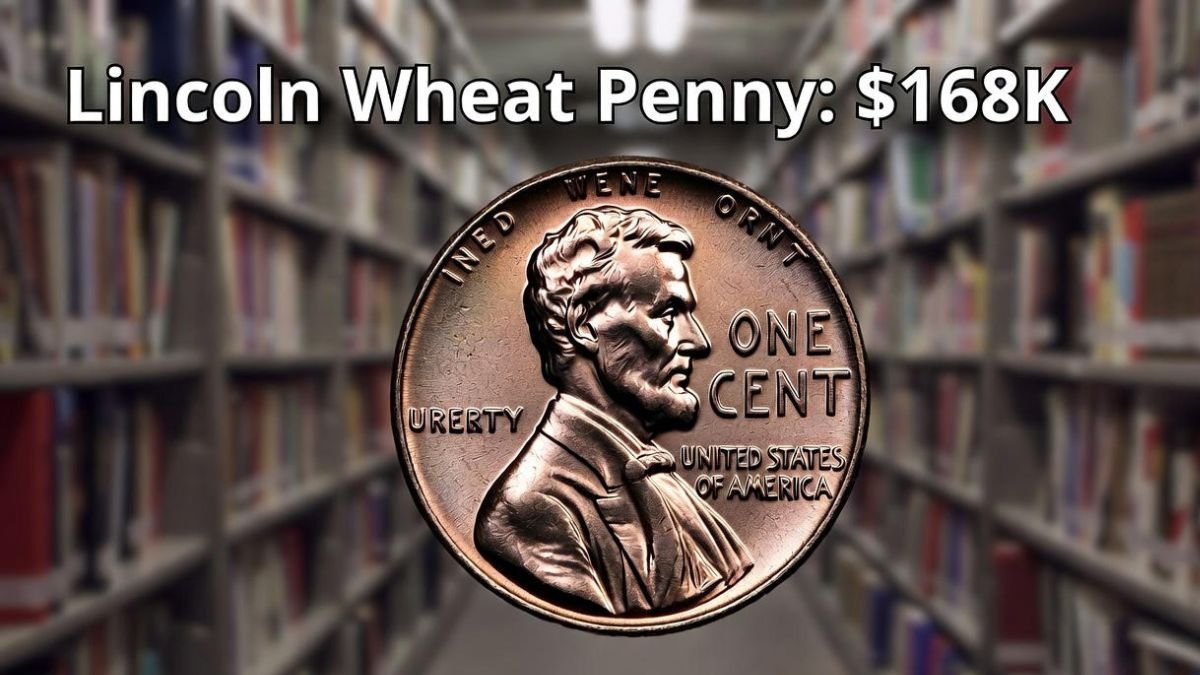
The Lincoln Wheat Penny may look like an ordinary coin at first glance, but behind its simple copper surface lies a fascinating story of history, rarity, and astonishing value. Imagine someone paying as much as $168,000 for a single penny that once bought a piece of candy. Sounds unbelievable, right? Yet this is exactly what has happened in several rare coin auctions. Today, we’ll take a deep dive into why this humble coin is so treasured, how it became such a valuable collectors’ item, and how some of these rare pennies are still quietly circulating in everyday pockets and drawers.
A Simple Coin With a Rich History
The Lincoln Wheat Penny was first introduced in 1909 to commemorate the 100th birthday of Abraham Lincoln. It was the first U.S. circulating coin to feature a real person rather than a symbolic figure. Designed by sculptor Victor David Brenner, the front side shows Lincoln’s familiar profile, while the reverse features two stylized wheat stalks—both elegant and symbolic of American agriculture. Because of these wheat stalks, collectors affectionately call it the “wheat penny.”
Minted until 1958, the coin reflects an era of American life marked by wars, economic depressions, industrial growth, and cultural change. For millions of Americans, wheat pennies jingled in pockets, filled piggy banks, and bought everyday essentials. Today, those same small copper pieces have transformed into nostalgic reminders of the early and mid-20th century.
What Makes Some Wheat Pennies Worth $168,000?
Not every Lincoln Wheat Penny is worth a fortune. In fact, most are valued from a few cents to a few dollars depending on condition. However, certain rare versions have stunned collectors and auction houses by selling for well into six figures. So, what separates a regular wheat penny from one worth $168,000?
The answer lies in rarity, errors, and historical context. Some pennies were produced in extremely limited numbers. Others contain minting mistakes that slipped past quality control. These unintended flaws create unique variations—essentially one-of-a-kind coins highly sought after by collectors. Condition also plays a massive role. A penny preserved in near-perfect shape—sharp details, no scratches, minimal wear—can skyrocket in value.
In these rare cases, what was once just one cent suddenly becomes a treasure.
Famous Rare Wheat Pennies
While many rare wheat pennies exist, some stand head and shoulders above the rest.
One example includes the legendary 1943 copper penny. During World War II, the U.S. Mint produced pennies using steel coated with zinc to conserve copper for wartime efforts. However, a tiny number of copper planchets—thin copper discs used for minting—accidentally remained in the machinery. These were stamped with the 1943 design, creating one of the rarest coin mistakes in American history. Today, collectors will pay extraordinary sums for one of these elusive coins in excellent condition.
Another highly valuable example is the 1909-S VDB penny. In this case, the designer Victor David Brenner placed his initials “VDB” prominently on the back of the coin. Some critics felt the initials were too bold, leading the Mint to remove them soon after. Only a limited number of coins from the San Francisco Mint bear both the “S” mint mark and the VDB initials. This combination of scarcity and controversy has elevated its value to incredible heights.
Coins like these help explain how a wheat penny can fetch $168,000—or more—when the right buyer and coin meet.
Why Collectors Love Wheat Pennies
Coin collectors, known as numismatists, are drawn to wheat pennies for many reasons. First, they are deeply tied to American history, covering decades of important social and economic change. Second, they are relatively accessible. Even beginners can afford to start collecting common wheat pennies before advancing to rare and expensive ones. Third, there’s a sense of mystery and excitement. You never quite know what hidden gem might appear in a dusty jar of old coins or a forgotten coin roll from the bank.
Beyond monetary value, many collectors feel emotional attachment. These coins may remind them of childhood, grandparents, or simpler times. Some people inherit jars of wheat pennies and discover that the sentimental treasure also carries significant financial worth.
The Ongoing Circulation of Wheat Pennies
One of the most fascinating facts about wheat pennies is that millions are still in circulation today. Even though they stopped being minted in 1958, they continue to resurface in pocket change, coin jars, cash drawers, and coin-counting machines across the country.
Think about it: somewhere out there, an unsuspecting cashier, teenager, or retiree might handle a rare wheat penny without realizing its significance. A penny worth thousands—or even hundreds of thousands—could still appear in the wild. This possibility adds an exciting treasure-hunt element for collectors and everyday people alike.
Many banks continue to receive rolled coins that may include wheat pennies mixed in. Coin machines occasionally sort them incorrectly. And families who stored coins decades ago are still rediscovering them today. The ongoing circulation keeps the legend of the wheat penny alive.
What Determines a Wheat Penny’s Value?
Several key factors influence how much a wheat penny is worth.
One of the most important elements is mint mark and year. Coins struck at certain mints or produced during specific years can be worth far more than others. The mint mark—such as “S” for San Francisco or “D” for Denver—can dramatically affect rarity.
Another factor is condition, also called “grade.” Collectors use a detailed grading scale that ranges from heavily worn to mint-state perfection. Two coins from the same year may differ in value by thousands of dollars simply because one has been better preserved.
Finally, scarcity and demand play a major role. The fewer coins available—and the more collectors want them—the higher the value climbs.
How Rare Coins Gain Their Value Over Time
Rare coins like the Lincoln Wheat Penny often increase in value as time passes. This growth occurs for several reasons. As older coins wear out or disappear into permanent collections, fewer remain in circulation. Meanwhile, new collectors enter the hobby, increasing demand. Historical appreciation also contributes value, as people grow more fascinated with artifacts from earlier eras.
In essence, time transforms these pennies from basic currency into historical artifacts. Each one becomes a tiny piece of American heritage.
Can You Still Find a Valuable Wheat Penny Today?
The answer is yes—although the chances are slim, it’s absolutely possible. Some of the most exciting coin discoveries have come from unexpected places: inherited collections, flea markets, coin jars, or even pocket change.
Anyone curious about their wheat pennies should start by sorting them by year and mint mark. Coins from the early 1900s, wartime years, or special variations may deserve closer inspection. If a coin appears flawless or unusual, collectors often recommend professional appraisal or grading.
Just think: a penny found on the floor today could turn out to be worth thousands tomorrow.
A Symbol of American Resilience
Beyond value and collecting, the Lincoln Wheat Penny represents something deeper. It symbolizes endurance. Through world wars, economic struggles, and decades of change, these coins continued to circulate, reminding generations of Abraham Lincoln’s legacy. Their modest design speaks to American simplicity, yet their story reveals immense cultural richness.
Even today, they inspire curiosity, nostalgia, and a sense of discovery.
Conclusion
The Lincoln Wheat Penny proves that even the smallest and most ordinary-seeming objects can hold extraordinary stories—and sometimes extraordinary value. While most wheat pennies may be worth only a few cents, rare versions have shocked the world by selling for astonishing amounts, even as high as $168,000. Their history, scarcity, and emotional connection make them one of the most beloved coins among collectors.
Perhaps the most magical part of this story is that many wheat pennies are still out there, quietly circulating, waiting to be discovered. In a world where everything moves quickly, these tiny copper coins remind us to slow down, look closely, and appreciate the hidden treasures in everyday life.
So the next time you receive a penny in your change, don’t dismiss it too quickly. Take a moment to look at the date, the design, and the tiny details. Who knows? You may just be holding a priceless piece of history in the palm of your hand.
FAQs
Q1. What is the Lincoln Wheat Penny worth $168,000?
A. A rare version of the Lincoln Wheat Penny that has a unique minting error or rarity.
Q2. Is this penny still in circulation?
A. Yes, some rare Wheat Pennies may still appear in everyday change.
Q3. Which years are most valuable?
A. Early mint years and rare error coins are usually the most valuable.
