
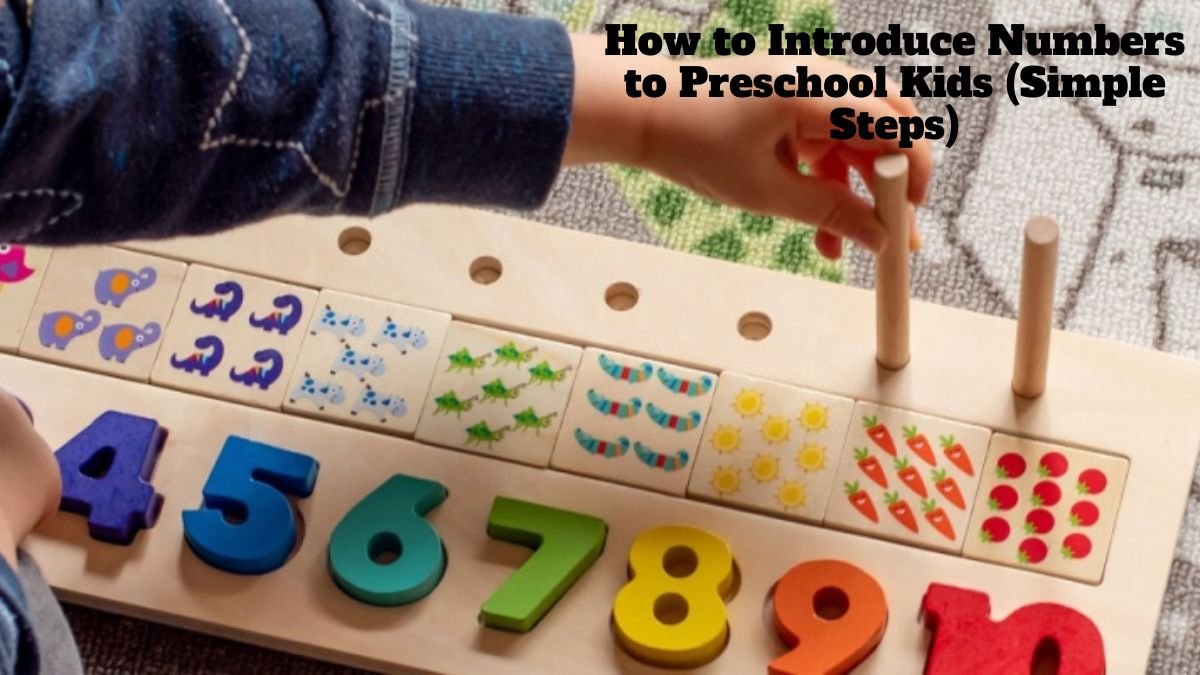
A child’s early education is the foundation for their entire life. When a child enters preschool, their curiosity is at its peak—they want to understand everything by touching, seeing, and hearing. This is the perfect time for parents and teachers to introduce children to the world of numbers. But this should be more fun and experiential than through books. So, let’s explore 10 easy and effective ways to teach your preschooler numbers—all while playing.
Start Counting with Everyday Items
The easiest way for children is to teach counting with everyday objects. For example, when you give them fruit, say “Here are 2 apples,” or when climbing stairs, count “1, 2, 3…” together. This way, children associate things with real experiences and memorize numbers automatically. This method is more effective than books because the child is “doing” while learning.
Teach through songs and poems
Children love music. Play rhymes or counting songs like “Ek Do Teen Chaar, Bandar Gaya Bazaar.” Humming rhymes helps children learn numbers and strengthen their memory.
The special thing about rhymes is that they connect numbers with rhythm and beat, so children never forget them.
Teach Numbers Through Play
The best way to learn is always through play. You can play games with children that use numbers—like “How many toys are there?”, “Who will take the first three steps?”, or “Which number came up on the dice?”
This helps children not only understand numbers but also learn to use them in their world.
Use Number Cards and Colorful Charts
Visual learning is very effective for children. Use colorful charts, number flashcards, or wall posters.
When a child sees these numbers on the wall every day, they gradually begin to recognize and repeat them.
You can place a picture of an apple under “1” or a picture of two balls under “2” so that the child understands what the numbers represent.
Teach Counting with Hands and Fingers
Fingers are the easiest “counting tool” for children. When you say “two,” show two fingers. Children quickly grasp this process and develop a real understanding of counting.
This method naturally enhances children’s counting skills because they are learning with parts of their body—which they find more fun.
Add Numbers While Telling Stories
Adding numbers to stories is a great technique. For example, you might say, “One day three rabbits went to the forest,” “They ate five carrots.”
This way, the child remains immersed in the story and remembers the numbers with context.
Through stories, children begin to understand not only numbers but also the meaning of sequence and counting.
Fun Counting in the Kitchen
The kitchen can become a mini math laboratory for children. Tell them, “Add 3 spoons of sugar,” “Bring 2 cups of milk”—small tasks like these help them learn to apply counting in real life.
This method is especially useful for mothers who want to teach their children at home. It makes learning not only fun but also memorable.
Use interactive apps or videos to recognize numbers
In today’s digital age, there are many educational apps and animated videos available for children that help teach numbers.
But remember to limit screen time—15 to 20 minutes is enough.
Through these apps, children learn not only counting but also colors, shapes, and patterns. This helps them develop both coordination and understanding.
Number-Related Activities (Activity Time)
You can engage children in activities like paper cutting, coloring, or sticking. For example, ask them to color the number “5” or “stick stickers on three balls.”
This not only teaches children to recognize numbers but also to repeat them in creative ways.
Such activities help children focus and strengthen their memory.
Encourage children for every small achievement
Praise is crucial in the learning process. When a child counts correctly, praise them—”Wow! You counted very well!”
This gives them confidence and makes them more motivated to learn.
Remember, for children, learning numbers is not just about studying, but about exploration—and your positive feedback makes that journey even more beautiful.
Conclusion: “Fun learning is more important than teaching”
Teaching numbers to preschoolers shouldn’t feel like preparing for an exam. It’s a process filled with play, experience, and creativity.
When children have fun while learning, they not only retain numbers but also stop fearing math.
If parents and teachers incorporate these simple methods into their daily routine, teaching numbers will become no less than a game.
