
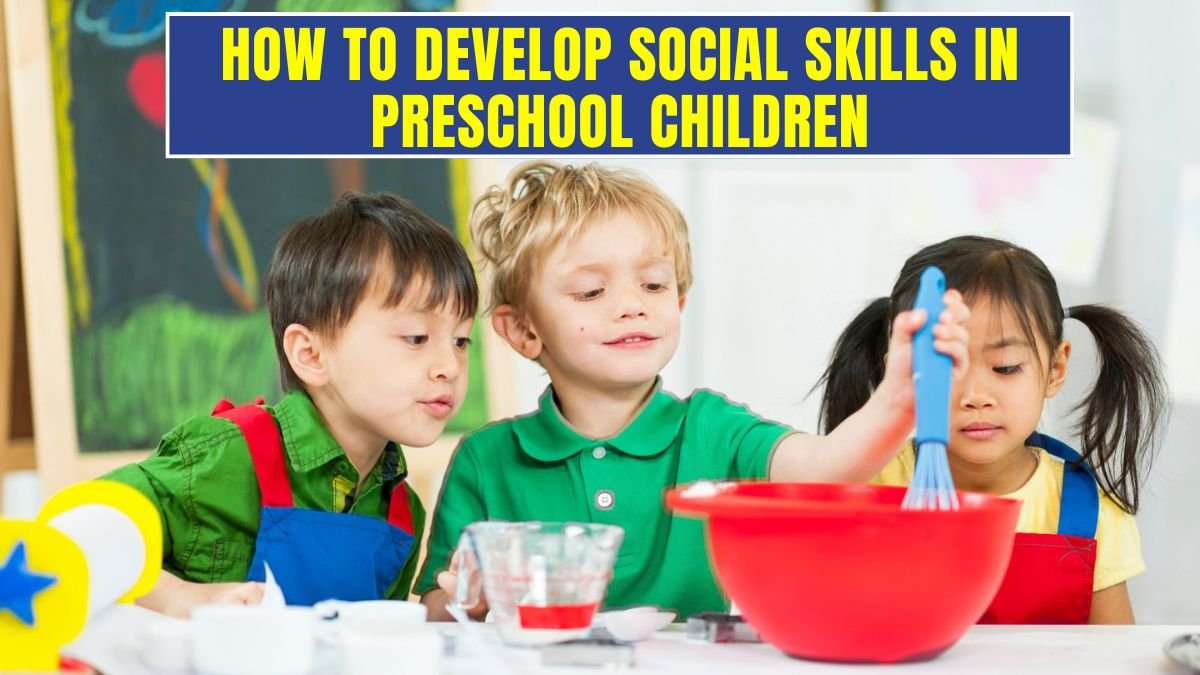
How to Develop Social Skills in Preschool Children: Childhood is the stage when a child’s foundation is laid – emotionally, mentally and socially. Learning the right social skills during this time will help children navigate social situations, make friends, and communicate effectively throughout their lives. Developing social skills, especially during the preschool years, helps children develop emotional balance and behavioral control. Children who possess these skills are not only better able to interact with others but also more regulated in their behavior.
The Role of Parents, Caregivers, and Teachers
A young child’s social upbringing doesn’t just happen within the four walls of home or school; it’s a shared responsibility. Parents, caregivers, and teachers all play a crucial role in this process. They can provide children with a better social foundation by providing opportunities to participate in social activities, exemplifying positive behavior, and providing timely guidance and feedback. When children interact with others, play, or participate in group activities, they naturally learn important skills like cooperation, empathy, and mutual understanding.
Social Skills to Develop in Preschool Children
Developing social skills at an early age isn’t limited to conversation; it encompasses a wide range of skills—such as cooperation, sharing, recognizing emotions, and listening attentively. Children learn all these skills through play, as play is the most natural medium for social development.
Cooperation
The spirit of cooperation is the foundation of a child’s communication skills. When a child learns to work together with others, they understand how important each individual’s role is. In preschool, children learn to cooperate through games or activities that require more than one child’s participation—such as building with blocks, coloring pictures, or telling a story together. During this time, they learn to take turns, accept others’ suggestions, and accomplish a collective goal.
Sharing
Sharing isn’t just about dividing an object; it fosters empathy, self-control, and conflict resolution. Children begin to learn to share between the ages of three and four. At this age, parents or teachers can teach children how to use toys, books, or other items in turn. For example, when two children fight over the same toy, adults can involve them in decision-making—such as asking, “There’s only one car and two children. What should we do?” Questions like these enable children to think, communicate, and problem-solve.
Recognizing Emotions
Understanding emotions and being sensitive to the feelings of others develops empathy in children. When children learn to recognize someone’s happiness, sadness, or anger, they are able to better regulate their own emotions. Storybooks are very helpful in this process. When you recognize the emotions of characters in a story and tell the child, “Look, this character is sad because his toy broke,” the child understands that everyone has emotions. This way, he learns to feel the pain and happiness of others.
Listening to Others
Another necessary skill to have in one’s social set-up is being a good listener. When children learn how to listen attentively, not only they become better communicators but also they learn to share their emotions in an appropriate way. If parents and teachers take a serious listening stance towards children and acknowledge their feelings, the latter will feel that their emotions are important. When you as a parent recognize the child’s sadness and say, “I understand that you are sad because you lost your toy,” you are giving them the power to comprehend and control their feelings.
Teaching Social Skills Through Activities
Kids consider playing and doing activities as the most helpful way of learning. Hence, the most effective method for teaching social skills in a preschool setting is by playing games-oriented activities. Activities that enhance cooperation, communication, and empathy give children the chances to learn. For instance, children playing group-based games, listening to stories, team painting, or role-playing not only make kids have fun but also help children to understand others’ point of view and develop a sense of the team.
Why Social and Emotional Skills Are Essential
Social and emotional skills are the basis of a child’s growth, broadly speaking, these skills include self-awareness, self-control, empathy, communication skills, and cooperation. These skills enable children to recognize the emotions of both themselves and others, control their reactions, and deepen the relationships. A preschooler who gets these skills from the very beginning is able to deal with school and life challenges bravely.
Benefits of Teaching Social-Emotional Skills
The benefits of these skills are not limited to behavior or communication. They influence a child’s overall personality, education, and future.
Academic Success
Such children socially and emotionally have a positive impact on their school performance. A study has revealed that kids with good emotional intelligence skills are able to concentrate more, follow the teacher’s instructions, and work in groups. The reason is that they know how to manage their emotions and behavior. Thus they tend to avoid giving in to distractions and keep their discipline in the classroom.
Positive Relationships
Social-emotional skills in children lead to more profound relationships with their peers as well as adults/teachers. They can understand other people’s emotions, argue less, and even become more cooperative. Such children become more liked by their peers, have more friends, and are more confident at school. This establishes a comfortable and happy learning atmosphere which, in turn, helps them grow academically.
Long-Term Benefits
In the long term, the benefits of having these skills are significant. Kids with sound social and emotional skills enjoy better mental and physical health conditions. They have increased self-esteem, tolerance, and self-confidence and thus become successful both in their careers and relationships. On the contrary, children who miss out on this early development of skills may struggle with stress, social isolation, and behavioral problems as they grow. Therefore, paying attention to these skills in the early years is not only a good investment in the childhood of a kid but also in their entire life.
Conclusion
Preschool is the period when the most changes take place in a child’s life and it is the most important one. It is only at this age that the brain and emotional framework develop rapidly. In case the youngsters receive the proper social and emotional instructions at this age, they not only become better students but also sensitive, cooperative, and balanced citizens. Parents, teachers, and caregivers should realize that providing kids with knowledge of letters and numbers is not enough; it is equally important to equip them with skills for social life. These social skills are indeed the real factors that will lead them to success, peace of mind, and self-confidence.
