
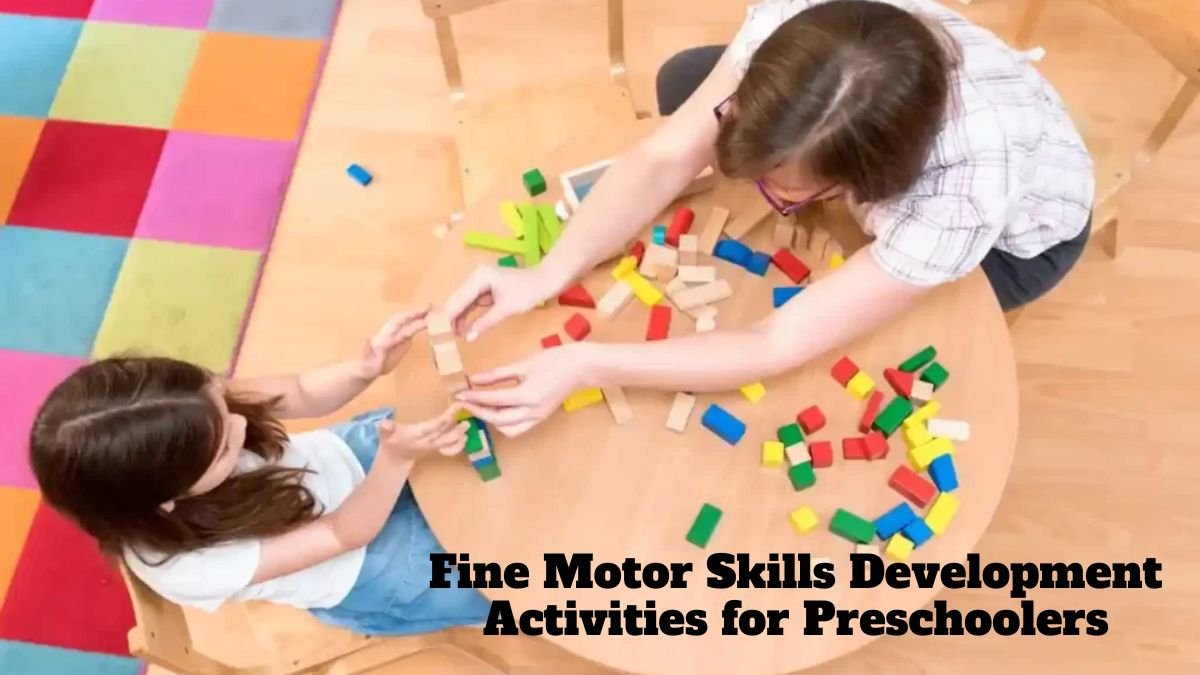
When a toddler learns to pick up a toy, button a button, hold a pencil, or eat food, it’s not just play—it’s practicing fine motor skills. These are abilities that teach a child the proper use of the tiny muscles in their fingers, palms, and wrists.
These skills develop most rapidly during preschool age (3 to 5 years). Engaging them in the right activities during this time not only strengthens their grip but also enhances their concentration, confidence, and creativity. Let’s explore 10 fun and effective ways to hone your child’s fine motor skills while playing.
Finger Exercises with Clay or Playdough
Soft clay or playdough is nothing short of magical for children. When they press, twist, stretch, or form small balls, their finger strength improves.
This activity also lets their imagination run wild—sometimes they make pizzas, sometimes animal shapes.
This way, the child learns how much their fingers can do without any pressure.
Bead Stringing – Making Bead Strings
Stringing small beads onto a string is a very effective fine motor skill activity.
It improves a child’s hand-eye coordination and teaches patience.
Start with larger beads and, as the child improves, make smaller beads.
This activity also improves color recognition and understanding of pattern formation.
Paper Tearing and Cutting Practice – Tearing and Cutting Paper
Parents often discourage children from tearing paper, but this activity is very beneficial for their hand development.
Give children colored paper and ask them to cut it into specific shapes—such as circles, triangles, or flowers.
This improves finger control and helps them learn to use scissors safely.
Plus, their creativity is awakened.
Peg Board Games – A Test of Accuracy and Attention
Peg boards have small holes and colorful pegs.
When children insert pegs into the holes, it strengthens their fine motor coordination.
This game also teaches spatial awareness and improves their ability to concentrate.
This type of play keeps children active both mentally and physically.
Buttoning and Zipping – Fun Learning Through Clothes
Buttoning or zip-zipping clothes may seem difficult for children, but it is an essential part of their development.
You can teach them activities like buttoning their dolls or toys, or zipping their own jackets.
This teaches them independence and builds their confidence that “I can do it myself.”
Coloring and Drawing – First Finger Skills
Coloring or drawing isn’t just art; it’s a great exercise for children’s fine motor control.
When children color with crayons or pencils, their grip improves.
This strengthens hand muscles and gradually prepares children for writing.
It also allows their imagination to explore a colorful world.
Tweezers and Tongs Games – A Fun Game of Pick and Drop
Give children small objects (such as pongee balls, beans, or blocks) and ask them to pick them up with tweezers or small tongs.
This game may seem simple, but it requires a lot of concentration and balance.
It strengthens hand grip and teaches children to concentrate.
Plus, it’s extremely fun for them because it feels like a game.
Puzzles and Shape Sorters – A Mind-Hands Connection
Shape sorting toys or puzzles enhance children’s logical thinking and motor control.
As they try to fit the correct shape into the correct place, they develop spatial awareness and problem-solving skills.
With each successful attempt, they feel a sense of satisfaction, which motivates further learning.
These activities are even more enjoyable when done together as a family.
Water Play Activities – Liquid Fun for Little Hands
Water is children’s favorite companion.
Give them plastic cups, droppers, or small buckets and have them pour water from one container to another.
This improves their finger control and turns learning into a responsive experience.
Water games also give children an early glimpse into science—like “how much is full, how much is spilled.”
Lacing Cards – Practice like needle and thread, but safer
Lacing cards have holes in them where children thread or thread.
- This activity strengthens their grip, concentration, and patience.
- It also teaches sewing practice, enabling children to handle more intricate work in the future.
- It’s also a calm and focused activity that teaches children to sit still.
Conclusion: Great Learning Through Play
Developing fine motor skills is the foundation of children’s early education.
These activities not only teach them how to write or grasp objects, but also develop patience, attention, independence, and creativity.
Therefore, both parents and teachers should engage children in games that make learning fun.
Remember, children learn best when they are happy—and with these 10 activities, every day will be a new discovery.
