
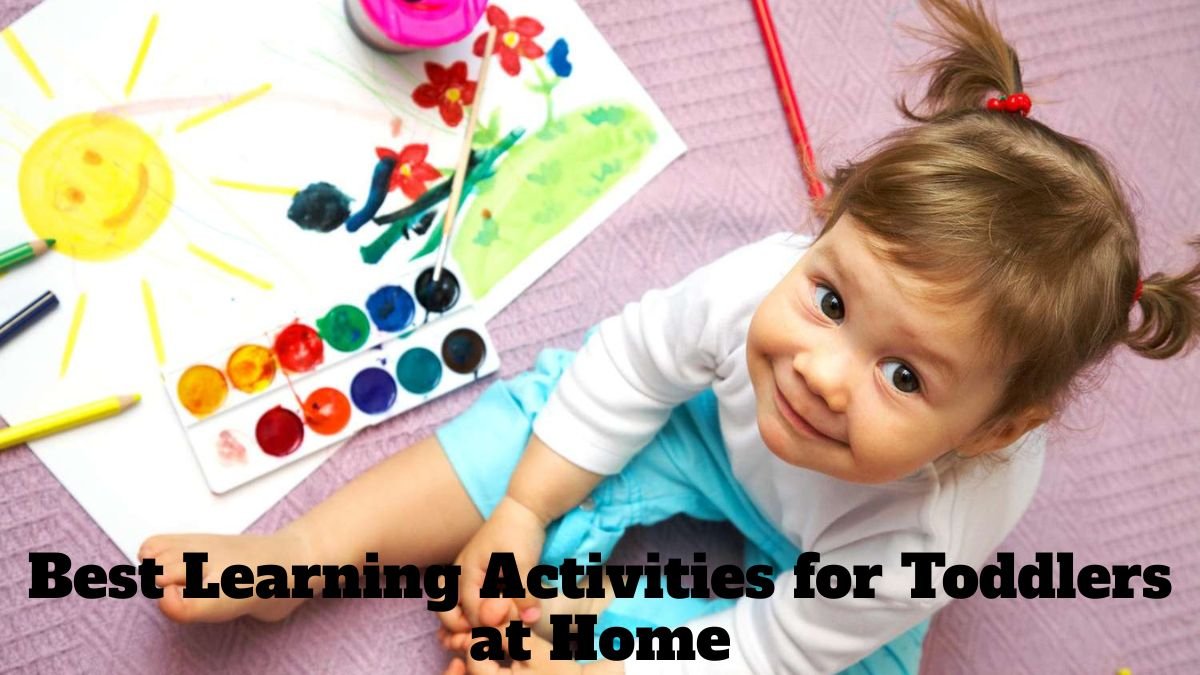
When a child is two years old, their world is filled with toys, colors, sounds, and touch. This is the age when they begin to learn by observing and observing their surroundings. But did you know that the biggest “school” for a toddler is their mother’s lap and the home environment? Small learning activities done at home not only help their child’s mental development but also strengthen their speech, creative thinking, and social understanding.
In today’s story-like guide, we’ll discuss how to teach your little one at home through fun and educational activities—all without expensive toys or gadgets
The World of Colors – Recognition and Experimentation
Every child is fascinated by colors. The blue sky, the red ball, the green leaf—these all create memories in their minds. You don’t need expensive books or toys to teach colors at home.
You can teach your child to identify colors by showing them colored cloth, crayons, or colored paper. For example, “Look, son, this is a red apple,” “This is a blue sky,” “This is a yellow sun.” Gradually, as your child learns to speak, they will begin to say things themselves—”Red ball,” “Blue car.” This activity not only expands their vocabulary but also develops visual recognition.
Listening to and Speaking Stories—The Foundations of Language
Toddlers learn language most quickly. If you read short stories to your child daily—such as the Panchatantra, the Cat and Mouse Story, or a fun story of your own—they will not only memorize words but also learn the language’s intonation and expression.
If you wish, you can also engage in dialogue with your child, such as “What did the cat do in the story?” or “Who did the prince help?” This will engage your child in the process of listening and responding, and their communication skills will improve.
Learning Math with Toys – Fun Counting
Even adults get intimidated by math, but teaching counting through playful play makes it easy and fun.
You can teach your child with toys – “Let’s see how many cars we have?” or “How many blocks make this tower?”
These small exercises introduce your child to numbers. Counting from 1 to 5 is sufficient at first. Gradually, as your child begins to understand, you can also teach them shapes and color sorting.
Music and Rhymes – Listen and Repeat
Music is a medium that instantly captivates children. Nursery rhymes like “Twinkle Twinkle Little Star” or “Lakdi ki Kaathi” improve both their memory and pronunciation.
You can sing to them in your own voice or play rhyme videos made for children on YouTube.
Music develops a child’s sense of rhythm and rhythm. They learn to repeat words, pick up intonation, and hone their listening skills.
Arts and Crafts – A Soaring Creativity
If you want your child to be imaginative and creative, let them play with colors, paper, and glue.
Show them how to make a paper boat from old newspaper or paint with colorful handprints. This will be a lot of fun.
Sensory activities like these improve the coordination between their mind and hands. They also learn how to make and decorate things.
Little Helpers in the Kitchen – First Lessons in Responsibility
Involving toddlers in household chores is not only fun but also teaches them responsibility.
You can involve your child in simple tasks like learning the names of vegetables, the colors of fruits, or counting spoons and plates.
When your child feels like they’re “helping Mommy,” their confidence grows. Gradually, they learn to do small things on their own, like pouring water, packing up their toys, or putting on their shoes.
Block Building – Exercises the Mind and Imagination
Children love to play with blocks or small pieces of wood. This game improves their spatial skills and understanding.
When a child builds or knocks down towers by connecting blocks, they learn cause and effect.
You can challenge them, “Let’s see who can build the tallest tower!” This turns learning into a competition and encourages them to work more attentively.
Nature Time – Learning Outdoors
If you have a garden or a nearby park, take your child outside for some time every day.
Tell them about plants, flowers, birds, and soil. Say, “This leaf is green,” “This flower smells fragrant,” and “Look at the bird singing.”
This activity develops a child’s sense of wonder. They learn to connect with nature and understand the world.
Dance and Movement – A Partnership Between Body and Mind
Every child loves to dance to music. If you want your child to be energetic and happy, dance with them for 10-15 minutes every day.
Dance strengthens their motor skills, i.e., small and large body movements. They learn to balance, understand direction, and keep rhythm.
If you want, you can have “free dance time” where the child can move to the music as they please.
Love and Patience – The Greatest Learning
More important than any learning activity are the love and patience of parents.
Every child is different – some learn to speak quickly, some slowly. Therefore, it is important that your child understands their behavior.
Conclusion:
Providing children with learning opportunities at home isn’t just a way to keep them busy, it’s also the foundation of their mental, emotional, and physical development.
A little time, a little imagination, and a lot of love—these three things can make your toddler a smart, sensitive, and happy person.
